Blame Putin. Or the war in Iran. Or someone. That, according to our Treasurer, is the cause behind the Australian central bank citing heightened inflation levels. The Bank has just tightened monetary policy based on such concerns.
The Bank governor came out publicly to rebut the Treasurer. I expect the atmosphere in a Canberra meeting room when those two are next present will be frostier than that during a compulsory unconscious bias training session. The Treasurer is a hapless buffoon, but he combines his buffoonery with an iron clad sense of being right about everything. A dangerous mix.
The Governor’s point was that oil prices are a component of inflationary pressures but the largest contributor is excessive Government spending.
The Australian Federal government is running a budget deficit. In 2026, the deficit was $22bn. By its own admission, any return to balance, let alone surplus, is over the horizon. Over Jupiter’s horizon, that is. There is simply no intention to balance the budget in the minds of the senior politicians in this Government. The deficit has to be financed in one of three ways, there are no others: increasing tax, borrowing or printing money. This Government appears to be attracted to all three.
Taxes are on the rise, dramatically so. Borrowing is up, and the money supply is up. As I’ve explained before, growth in the money supply over and above growth in GDP causes inflation. Firstly it is felt in producers’ prices then consumer prices. The rising price of oil is a much used, but fallacious, excuse. I would quibble with the Governor’s point about oil prices being a component of inflationary pressures. They can only have a short term effect on prices.
Borrowing money, by selling bonds to investors, merely shifts the time period (and potentially the population cohort) who has to “pay it back” in the future by reduced government spending at that time. But kicking cans down the road is a Parliamentary sport. Eventually, the political heat is too much and printing money is the preferred disguised method of inflating debt away. Make no mistake, printing money is theft, but it’s easier to hide from the public for a while.
Over the last 50 years, the price of milk in Australia has increased from around 20c per litre to $1.75. Now, the cows aren’t getting paid more. Milk is still milk. The rain is still free and grass grows when it rains. The farmers aren’t being paid more and in fact they will have mitigated to some extent price rises through improved productivity. The milk market is a neat way to isolate and demonstrate the effect of inflation on prices. That increase is entirely due to inflation. Or currency debasement as I prefer to call it.
Here is the current comparison of recent growth rates in prices and the money supply.
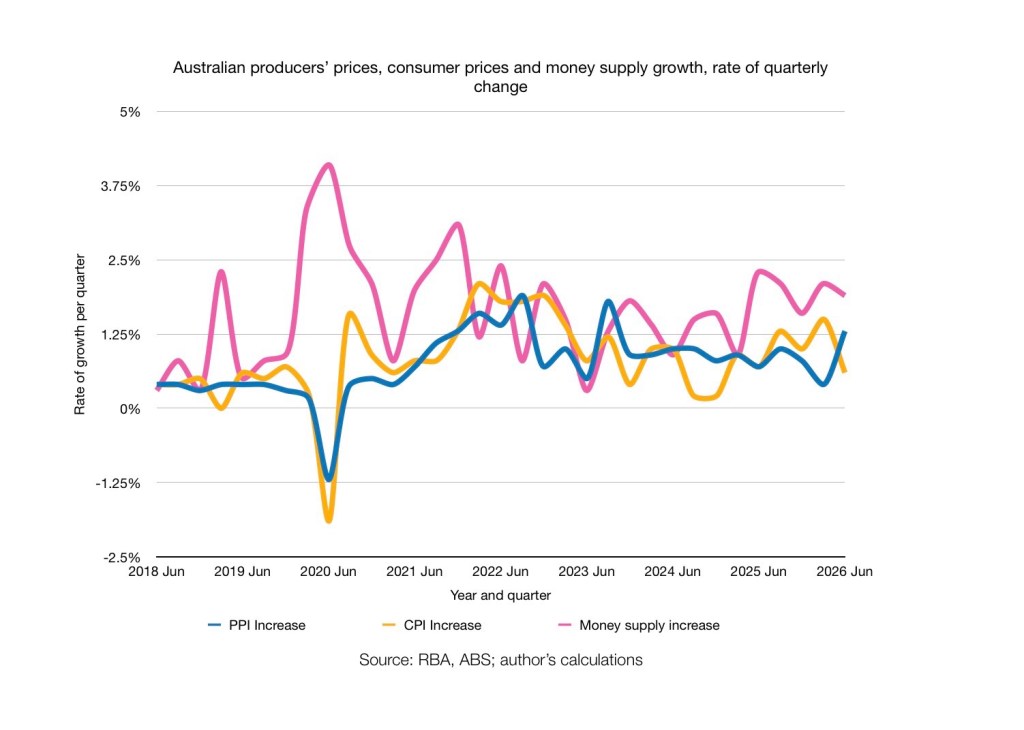
After Covid, the money supply grew at a slowing rate until around June 2023. Since then, it has been growing at an increasing rate. The same pattern is followed by the prices with a lag. There is inflation built in and it’s coming down the line. Unstoppable.

